1. What Are Titanium Precision Turned Parts?
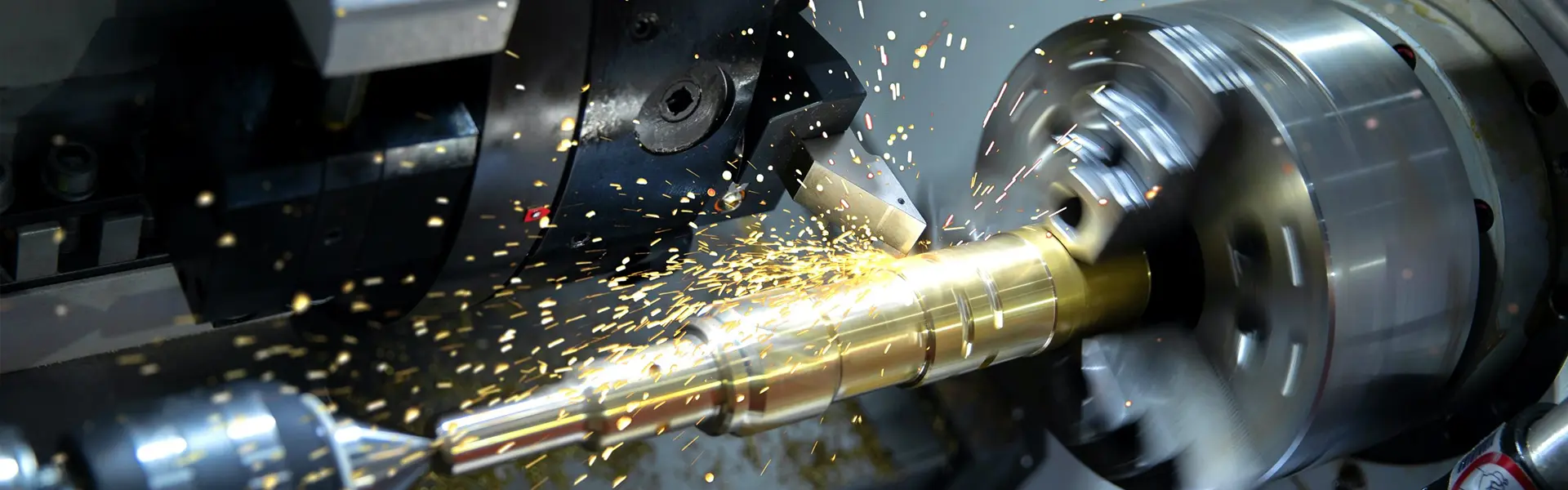
Titanium precision turned parts are components manufactured by removing material from rotating titanium stock using specialized turning equipment. Computer numerical control (CNC) systems guide the cutting tools to produce accurate diameters, lengths, grooves, threads, bores, and other specified features.
Unlike general-purpose metal components, precision-turned parts are designed to meet defined engineering requirements. Their dimensions and surface conditions may directly influence sealing performance, assembly alignment, rotational movement, fastening reliability, and equipment service life.
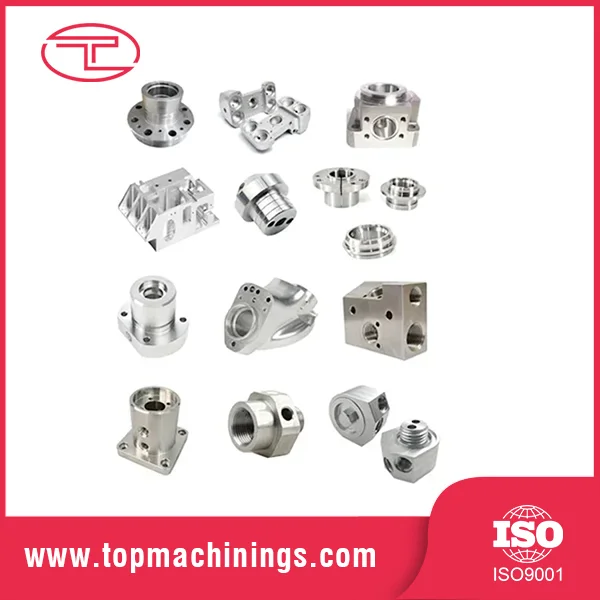
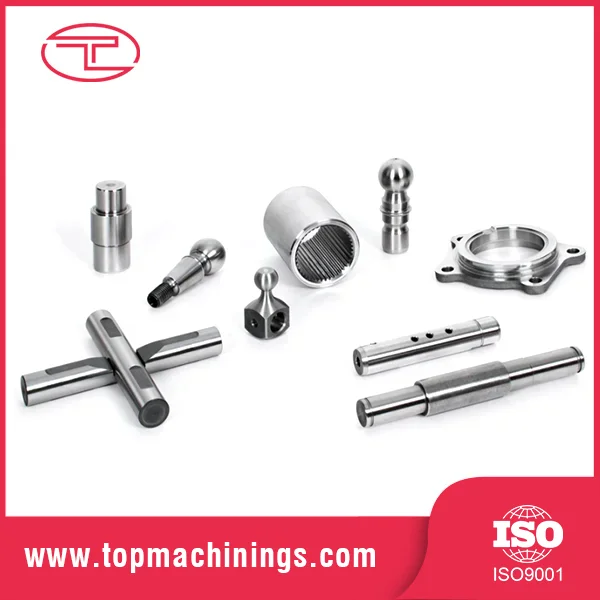
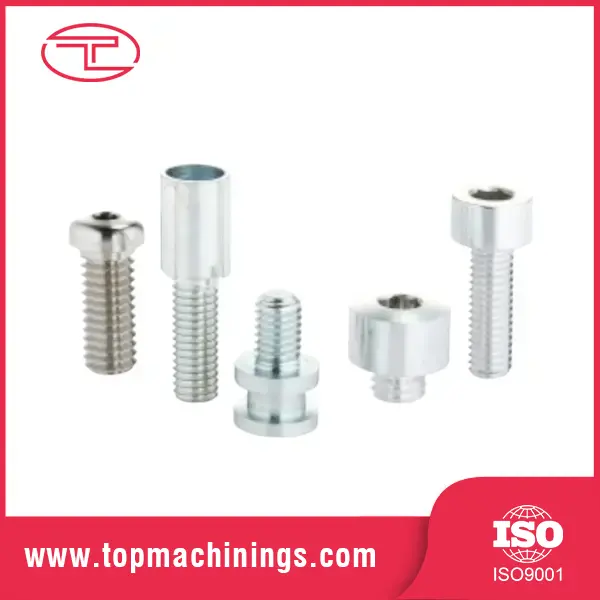
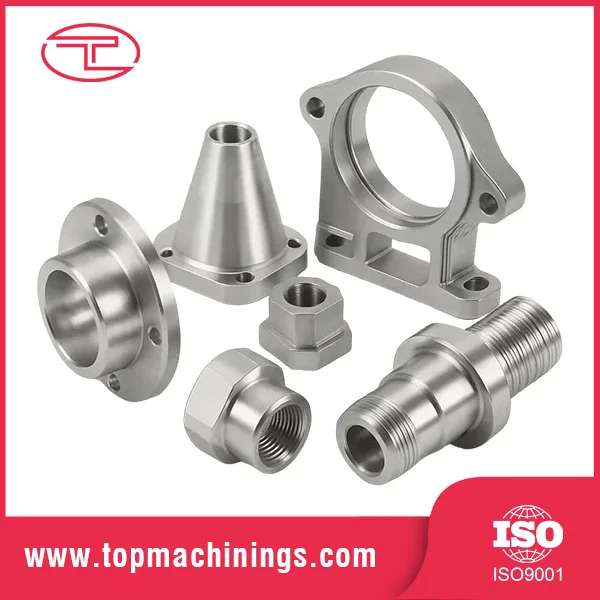
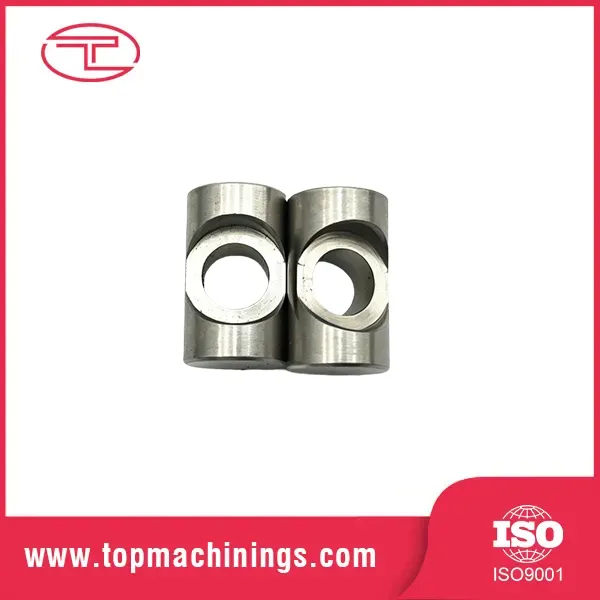
Typical examples include titanium shafts, bushings, sleeves, pins, threaded fittings, spacers, connectors, and custom cylindrical components. Depending on the drawing, a part may require turning alone or additional milling, drilling, threading, grinding, and surface finishing.
What Makes a Turned Part Truly Precision-Engineered?
- Dimensional accuracy: Critical diameters, lengths, and bores remain within specified tolerances.
- Geometric control: Concentricity-related requirements, runout, roundness, and other geometric characteristics are controlled where necessary.
- Surface quality: Functional surfaces meet specified roughness and finishing requirements.
- Material consistency: The titanium grade and material condition match the engineering specification.
- Repeatability: Production processes maintain consistent results across approved batches.
For buyers, the goal is not simply to obtain a titanium component. It is to obtain a component that fits the assembly, performs reliably in its operating environment, and can be manufactured consistently at the required volume.
2. Why Does Titanium Matter in Precision Manufacturing?
Titanium is selected when conventional metals cannot provide the required combination of mechanical performance, weight, and environmental resistance. Its benefits are particularly valuable in compact assemblies where each component must deliver dependable performance without adding unnecessary mass.
High Strength with Low Weight
Titanium alloys offer a favorable strength-to-weight ratio. Compared with many steels, titanium alloys can provide substantial weight savings while maintaining the strength needed for appropriately designed components. This makes them attractive for aerospace hardware, lightweight mechanisms, and portable equipment.
Excellent Corrosion Resistance
Titanium naturally forms a protective oxide film that contributes to its corrosion resistance in many environments. Depending on the grade and service conditions, it can be suitable for marine equipment, chemical processing systems, and components exposed to moisture or corrosive media.
Nevertheless, compatibility should always be assessed against the actual chemicals, temperatures, crevice conditions, and operating pressures involved. No single titanium grade is suitable for every environment.
Reliable Performance in Demanding Applications
Appropriately selected titanium components can provide a useful combination of mechanical strength, corrosion resistance, and long-term functional reliability. Certain titanium grades also offer good biocompatibility, although medical use requires additional material, manufacturing, and regulatory controls.
Potential for Long-Term Value
Titanium usually costs more to purchase and machine than common aluminum or steel alternatives. However, its value should be assessed across the component's service life. Lower weight, reduced corrosion-related maintenance, and application-specific performance advantages may justify the initial investment.
The most economical solution is not necessarily the material with the lowest unit price. It is the material that meets the application's functional requirements without unnecessary processing or excessive specification.
3. What Titanium Grades Should You Consider?
Material selection affects strength, corrosion resistance, machinability, cost, and compliance with customer specifications. Two common choices are commercially pure titanium Grade 2 and the titanium alloy Ti-6Al-4V, commonly known as Grade 5. Other grades may be more appropriate for specific chemical, structural, or regulated applications.
| Material | Main Characteristics | Potential Applications | Selection Consideration |
|---|---|---|---|
| Grade 1 | Commercially pure; relatively low strength and high ductility | Selected chemical and corrosion-resistant components | Useful when formability and corrosion resistance are priorities |
| Grade 2 | Commercially pure; balanced strength and corrosion resistance | Marine fittings, chemical equipment, industrial connectors | A practical option for many general corrosion-resistant applications |
| Grade 5 | Ti-6Al-4V alloy; high strength-to-weight ratio | Aerospace hardware, mechanical components, high-performance equipment | Requires attention to machining conditions and specified material properties |
| Grade 9 | Ti-3Al-2.5V alloy; useful strength and formability balance | Selected tubing systems and lightweight structural components | Confirm suitability for the actual component form and specification |
| Grade 23 | Ti-6Al-4V ELI; controlled interstitial content | Selected medical and other high-requirement applications | Requires appropriate material certification and application-specific qualification |
The table provides a general selection guide, not a substitute for engineering approval. Material grades, supply conditions, and national or industry standards are not automatically interchangeable. Buyers should specify the exact grade, governing standard, and required material condition.
How Can You Avoid Material Selection Mistakes?
- Identify the actual loads, temperature range, and surrounding environment.
- Confirm whether corrosion resistance, strength, fatigue performance, or weight is the primary requirement.
- Review the material standard and any customer-specific restrictions.
- Confirm whether material certificates and batch traceability are required.
- Ask the manufacturer to review material availability before approving the production schedule.
Choosing a grade solely because it is described as high strength or corrosion-resistant can increase costs without improving the finished product. Material decisions should be based on measurable operating requirements.
4. How Are Titanium Precision Turned Parts Manufactured?
Reliable titanium turning requires a controlled workflow that connects engineering review, material preparation, machining, inspection, and final delivery. Each stage helps prevent defects that may otherwise appear during assembly or field operation.
Step 1: Drawing Review and Design Evaluation
The manufacturer reviews the technical drawing, three-dimensional model, critical dimensions, threads, surface requirements, and production quantity. Potential issues include unnecessarily tight tolerances, inaccessible features, thin walls, and complex internal geometries.
Early engineering feedback helps identify changes that could simplify machining without compromising function.
Step 2: Material Preparation
Raw material is selected according to the specified titanium grade, stock form, dimensions, and material condition. When required, certificates and identification records are checked before production begins.
Step 3: CNC Turning
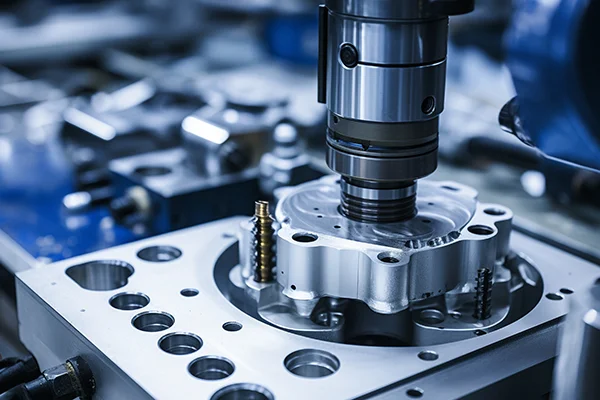
During CNC turning, the workpiece rotates while cutting tools remove material according to the programmed machining sequence. Depending on the design, the process can create external diameters, shoulders, grooves, bores, and other rotational features.
Appropriate workholding, tool geometry, cutting parameters, and coolant delivery are essential for stable production.
Step 4: Secondary Operations
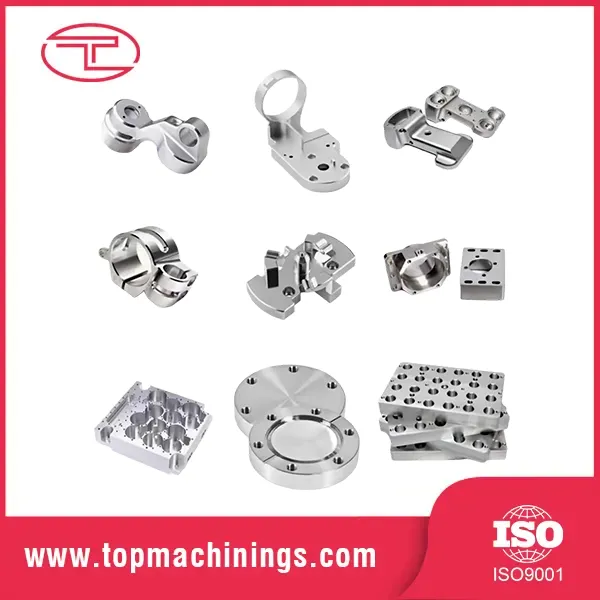
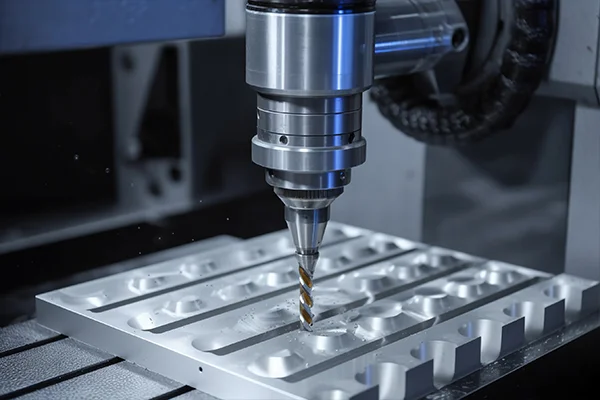
Some components require additional milling, drilling, tapping, thread cutting, grinding, or deburring. These operations should be coordinated to protect critical surfaces and maintain dimensional relationships between features.
Step 5: Inspection and Finishing
Finished components are checked against the drawing and purchase requirements. Depending on the application, this may include dimensional measurement, thread inspection, surface roughness testing, visual inspection, and material documentation review.
Any specified finishing treatment should be assessed for compatibility with the titanium grade, functional requirements, and subsequent assembly operations.
Step 6: Packaging and Delivery
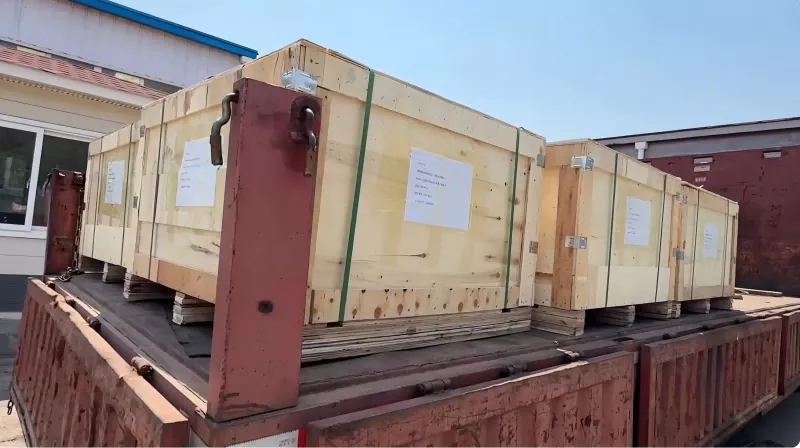
Parts should be cleaned and packaged in a manner that protects threads, sealing surfaces, and precision features. Clear labeling and traceability records can simplify receiving inspection and inventory management.
5. What Machining Challenges Should Buyers Understand?
Titanium can be machined successfully, but its behavior differs from that of many common engineering metals. Understanding these differences helps buyers evaluate quotations, production schedules, and manufacturing capability more realistically.
Heat Concentration and Tool Wear
Titanium has relatively low thermal conductivity, so heat can become concentrated near the cutting zone. This can accelerate tool wear and affect surface quality if cutting conditions and cooling are not properly controlled.
Suitable cutting tools, stable machining parameters, effective coolant delivery, and timely tool replacement help maintain process consistency.
Elastic Recovery and Dimensional Variation
Titanium's elastic behavior can cause the material to spring back after cutting forces are removed. Thin-walled components and slender shafts are particularly sensitive to workholding pressure and cutting forces.
Careful fixture design, appropriate machining sequences, and intermediate measurement can help reduce distortion and improve dimensional control.
Chip Control and Surface Defects
Uncontrolled chips can interfere with machining, damage finished surfaces, and disrupt automated production. Incorrect tool conditions may also cause surface tearing, built-up material on the cutting edge, or inconsistent finishes.
Effective chip evacuation and inspection of critical surfaces are therefore important parts of the process.
Higher Manufacturing Costs
Titanium's material price, machining time, tooling consumption, and inspection requirements can all affect the finished component cost. Tight tolerances, complex features, and demanding documentation may increase the cost further.
Buyers can often improve cost efficiency by simplifying nonfunctional features, avoiding unnecessarily tight tolerances, and selecting an appropriate production quantity.
6. How Can You Specify the Right Tolerances?
Tolerances determine how much a manufactured dimension may vary while remaining acceptable. In titanium precision turned parts, the appropriate tolerance depends on the feature, material, geometry, manufacturing method, inspection capability, and functional requirements.
There is no universal tolerance that applies to every titanium component. The following examples illustrate how buyers can organize their requirements rather than guarantee a particular manufacturing capability.
| Feature | What to Specify | Why It Matters |
|---|---|---|
| Outside diameter | Nominal diameter and dimensional tolerance | Controls fit, clearance, and assembly compatibility |
| Internal bore | Bore size, tolerance, and relevant geometric requirements | Affects mating parts, fluid passages, and alignment |
| Overall length | Nominal length and permitted variation | Determines positioning and stack-up in an assembly |
| Threads | Thread standard, size, pitch, and tolerance class | Supports reliable fastening and interchangeability |
| Surface finish | Required roughness and measurement conditions | Influences sealing, friction, and contact behavior |
| Geometric features | Applicable GD&T requirements and datum references | Controls relationships between functional features |
Apply Tight Tolerances Only Where They Are Necessary
Applying very tight tolerances to every dimension can increase machining time, inspection effort, and rejection risk. A more practical approach is to identify the features that directly influence assembly, sealing, rotation, or load transfer.
For example, a bearing seat may require tighter dimensional control than a nonfunctional external shoulder. The final requirements should be established by the design engineer and verified with the manufacturer before production approval.
Confirm Inspection Methods Before Ordering
Ask how critical dimensions will be measured and recorded. Depending on the part, suitable methods may include calibrated micrometers, bore gauges, thread gauges, surface roughness instruments, optical measurement systems, or coordinate measuring machines.
The supplier should confirm that the proposed inspection method is appropriate for the specified tolerance and geometry.
7. What Industries Use Titanium Turned Components?
Titanium precision turned parts are used across industries where material performance, corrosion resistance, low weight, or specialized operating conditions justify their cost.
Aerospace and Aviation
Selected aerospace systems use titanium components for weight-sensitive structures, fasteners, shafts, fittings, and other precision hardware. These applications may require strict material specifications, traceability, and documented inspection procedures.
Medical Equipment
Titanium is used in certain medical instruments, equipment components, and implant-related products. Applications involving patient contact or implantation require appropriate material grades, validated processes, and applicable regulatory controls. General-purpose titanium machining alone does not establish medical suitability.
Marine and Chemical Processing
Corrosion-resistant titanium components can be useful in selected marine systems, fluid-handling equipment, and chemical processing installations. Grade selection must account for the actual fluid chemistry, temperature, pressure, and operating environment.
Industrial Machinery and Automation
Custom pins, sleeves, connectors, shafts, and precision fittings may benefit from titanium's mechanical properties in specialized machinery, automated equipment, and compact mechanisms.
Energy and High-Performance Equipment
Some energy systems and high-performance products use titanium components where weight, corrosion resistance, or mechanical performance is important. The design and material specification should reflect the application's actual loads and environmental exposure.
Across these industries, the most suitable component design is one that balances engineering requirements with manufacturability, inspection needs, and total cost.
8. How Can You Verify Part Quality?
A finished component can look correct while still failing to meet its dimensional or material requirements. A structured quality process helps buyers verify that the delivered titanium precision turned parts conform to the approved specification.
Review Material Identification and Traceability
Confirm the grade, governing material standard, and required material condition. Where specified, request material test certificates and ensure that the documentation can be linked to the delivered production batch.
Check Critical Dimensions
Inspection records should identify the measured features and demonstrate compliance with the applicable drawing requirements. For demanding projects, agree in advance on the inspection report format, sampling plan, and acceptance criteria.
Evaluate Surface and Thread Quality
Inspect functional surfaces for relevant defects and verify that threads conform to the specified standard. Deburring and cleaning should not damage sealing edges, mating surfaces, or other critical features.
Confirm the Quality System
Ask whether the manufacturer maintains documented procedures for production control, nonconforming products, equipment calibration, and corrective actions. Certifications should be checked for scope and validity rather than assumed from a supplier's general marketing statements.
- Approved engineering drawing and revision control.
- Material identification and required certificates.
- Documented dimensional and visual inspection.
- Defined acceptance criteria and nonconformance handling.
- Suitable packaging, labeling, and batch identification.
These measures help reduce receiving disputes, unexpected assembly problems, and the risk of inconsistent production batches.
9. How Can You Choose a Reliable Supplier?
Choosing a supplier for titanium precision turned parts requires more than comparing unit prices. Buyers should assess whether the manufacturer understands the application, can produce the required geometry, and has an inspection process suited to the project's risk level.
Evaluate Relevant Manufacturing Experience
Ask whether the supplier has experience with the specified titanium grade, similar part dimensions, required tolerances, and production volumes. Experience with a different metal does not automatically demonstrate equivalent capability in titanium.
Review Engineering Communication
A dependable supplier should be able to identify unclear drawing requirements, discuss manufacturing risks, and explain the trade-offs between tolerances, production methods, and costs.
Compare Complete Quotations
Ensure that quotations cover the same material grade, quantity, inspection requirements, finishing operations, packaging, and delivery conditions. A lower initial price may exclude important services or assume less demanding specifications.
Assess Production Consistency
For repeat orders, discuss process documentation, change control, batch traceability, and how dimensional variation is monitored. Consistency becomes particularly important when components are used in assemblies with limited clearance or strict performance requirements.
Work with a Clearly Defined Manufacturing Partner
When evaluating Qingdao Tuoyuan Metal Products Co., Ltd. for a titanium component project, buyers should provide the technical drawing, material requirements, target quantity, and inspection expectations so that the specific manufacturing requirements can be reviewed before an order is placed.
As with any supplier evaluation, confirm the relevant machining capabilities, material sourcing arrangements, quality documentation, and delivery commitments for the actual project rather than relying on general product descriptions.
10. What Factors Influence Manufacturing Costs?
The cost of titanium precision turned parts depends on the complete manufacturing process, not just the weight of the raw material. Understanding the major cost drivers helps procurement teams prepare more useful requests for quotation and avoid unnecessary expenditure.
| Cost Factor | Potential Cost Impact | Practical Optimization |
|---|---|---|
| Material grade | Different grades have different purchase prices and availability | Select a grade that meets verified engineering requirements |
| Part geometry | Complex features can increase setup and machining time | Simplify nonfunctional features where possible |
| Tolerances | Tight limits can require additional process control and inspection | Reserve tight tolerances for functionally critical dimensions |
| Order quantity | Setup costs are distributed differently across batch sizes | Compare prototype, small-batch, and repeat-production pricing |
| Finishing and testing | Extra operations and documentation add processing time | Specify only the finishes and tests the application requires |
| Lead time | Material availability and expedited production may affect price | Provide forecasts and confirm stock availability early |
Prepare a Complete Request for Quotation
To obtain meaningful and comparable quotations, include the following information:
- 2D engineering drawing and, where available, a 3D model.
- Exact titanium grade and material specification.
- Required tolerances, surface finish, and thread details.
- Prototype quantity and expected repeat-order volume.
- Inspection reports, certificates, and traceability requirements.
- Required finishing, packaging, delivery location, and target date.
Complete information allows suppliers to assess feasibility and identify cost drivers before production begins. It also reduces the likelihood of misunderstandings about material substitutions, inspection scope, and delivery expectations.
11. Frequently Asked Questions
1. What are titanium precision turned parts commonly used for?
They are used for shafts, pins, bushings, sleeves, fittings, connectors, and other components requiring controlled dimensions and application-specific material properties. Common sectors include aerospace, medical equipment, marine systems, chemical processing, and specialized industrial machinery.
2. Which titanium grade is best for precision turning?
There is no universally best grade. Grade 2 is often considered for corrosion-resistant applications that do not require the higher strength of certain titanium alloys. Grade 5 is frequently selected for higher-strength components. The final choice depends on the required properties, material specification, operating environment, and manufacturing feasibility.
3. Are titanium precision turned parts more expensive than stainless steel parts?
They are often more expensive because titanium raw material and machining can involve higher costs, greater tooling demands, and longer processing times. Actual pricing depends on the grade, geometry, tolerances, quantity, inspection requirements, and finishing operations.
4. Can CNC turning produce complex titanium components?
Yes. CNC turning can produce many cylindrical features, grooves, threads, and bores. Parts with additional nonrotational features may require live tooling, CNC milling, drilling, or other secondary operations. Feasibility depends on the geometry and available equipment.
5. What information is needed to request a quotation?
Provide an engineering drawing, exact material grade, tolerances, surface requirements, quantity, inspection expectations, and target delivery date. A 3D model can help clarify complex geometries and support manufacturing review.
6. How can buyers ensure consistent quality between batches?
Agree on the approved drawing revision, material specification, inspection plan, acceptance criteria, and documentation requirements. For repeat production, discuss batch traceability, process control, and how nonconforming parts will be handled.
7. Can titanium turned parts be customized?
Custom components can be manufactured to project-specific drawings when the geometry, material, tolerances, and production volume are compatible with the supplier's capabilities. Buyers should confirm manufacturing feasibility and any special inspection or finishing requirements before approving the order.
8. What should buyers check before approving a production order?
Confirm the material grade, drawing revision, critical dimensions, inspection requirements, quotation scope, delivery schedule, and packaging instructions. For demanding applications, approve a first article or sample when appropriate before authorizing full production.
Conclusion
Titanium precision turned parts offer valuable advantages when component performance depends on strength-to-weight ratio, corrosion resistance, dimensional accuracy, and application-specific reliability. Achieving these benefits requires appropriate material selection, controlled CNC machining, realistic tolerances, and a quality process matched to the component's intended use.
For engineering teams and procurement professionals, the most effective sourcing strategy begins with a clear technical specification and an informed comparison of manufacturing capability, inspection requirements, cost, and delivery commitments. Addressing these factors early can reduce avoidable expenses and improve the consistency of the finished components.
Looking for Titanium Precision Turned Parts for Your Project?
Choosing the right manufacturing partner starts with understanding your component's material, dimensions, functional requirements, and production needs. Qingdao Tuoyuan Metal Products Co., Ltd. welcomes inquiries from buyers seeking to discuss custom metal component requirements and manufacturing solutions.
Prepare your drawings, specifications, and estimated order quantity to help clarify your project requirements.
Have a component specification to discuss? Contact us to start a conversation about your titanium precision turned parts project and explore the next steps for your sourcing needs.