News

What Surface Treatment Protects Metal Parts from Corrosion?

2026-09-23 0 Leave me a message

A machined part leaves the machine clean, sharp and unprotected. Whether it still looks that way after two winters on a vehicle, a season in a pumping station or a year in a coastal plant is decided by a layer that is often a few thousandths of a millimeter thick. Surface treatment is therefore not a cosmetic step at the end of a job; it is a functional specification with its own standards, its own thickness tolerance and its own effect on the dimensions the machinist has just produced. This article compares the finishes we apply most often and the numbers behind them.


The Four Mechanisms Behind Corrosion Protection

Almost every finish used on machined components works by one or more of four mechanisms.

Sacrificial protection. A less noble metal coating corrodes first and protects the base metal. Zinc on steel is the classic example.

Barrier protection. A physically tight layer keeps water and oxygen away from the surface. Paint, powder coating and electroless nickel work this way.

Passive layer formation. The surface itself is converted into a stable oxide. Anodizing on aluminum and passivation on stainless steel belong here.

Surface condition improvement. Removing contamination, free iron, or stress raisers so that the base metal can form its own protective film.

Choosing a finish means deciding which mechanism the application needs and then making sure the thickness it adds does not undo the tolerances that were just machined.


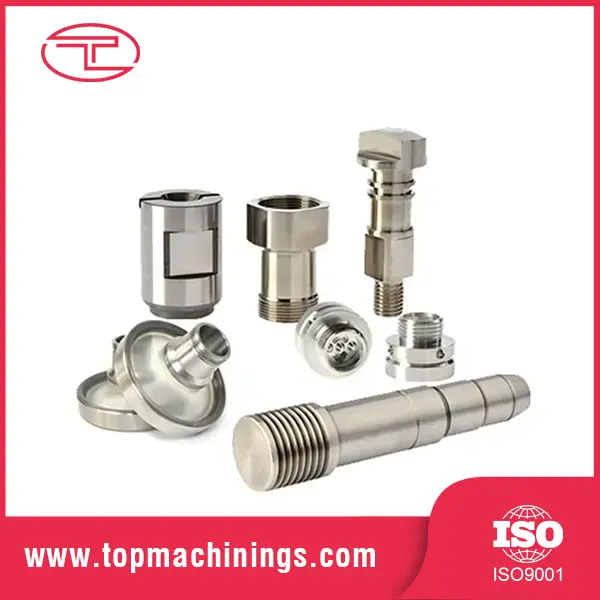
CNC Machined Components


Comparing the Common Finishes

Finish

Typical thickness

Salt spray expectation

Where it suits

What to watch

Zinc plating with clear or blue chromate

5 to 12 micrometers

around 96 to 200 hours

General steel hardware, fasteners, brackets

Thickness builds on threads and close fits.

Zinc plating with yellow or thick film passivation

8 to 25 micrometers

several hundred hours, commonly 200 to 500

Outdoor steel parts, automotive underbody

Older hexavalent processes are being phased out; trivalent processes differ in performance.

Electroless nickel, nickel phosphorus

5 to 25 micrometers

500 to 1000 hours at heavier deposits

Wear plus corrosion together, hydraulic and food equipment

Bath chemistry drives phosphorus content and therefore hardness.

Hard anodizing on aluminum

25 to 50 micrometers (Type III)

500 to 1000 hours when properly sealed

Sliding surfaces, marine hardware, wear faces

Grows into the surface as well as out, changes dimensions, and edges build up.

Decorative anodizing on aluminum

5 to 25 micrometers (Type II)

several hundred hours when sealed

Housings and visible parts, color options

Without sealing, the layer underperforms; organic dyes fade under UV.

Passivation of stainless steel

Effectively no dimensional change

Not the right test for this finish

303, 304, 316L parts after machining

Removes free iron, does not add protection against chlorides beyond what the alloy gives

Black oxide

Under 1 micrometer growth

Light protection needs oil.

Tooling, fasteners, and parts that fit must not change.

Not suitable as a standalone outdoor finish

Powder coating

60 to 120 micrometers dry film

Depends on system; specified by the corrosivity category under ISO 12944

Frames, enclosures, brackets

Thickness is large enough to affect fits and thread entry


Thickness Is a Machining Problem, Not Just a Chemistry Problem

The most common surface treatment failure we see is not a bad bath. It is a drawing where the finish thickness was never subtracted from the tolerance. Two examples make the point.

A shaft with a plated diameter of 10 mm and a 10-micrometer zinc layer measures about 10.02 mm after plating, because the coating grows on both sides of the diameter. On a close sliding fit, that is the difference between assembly and scrap.

A thread that must accept a nut needs coating allowance, typically achieved by machining the thread at a 6g or 6h allowance before plating, or by masking the thread and using a dry film lubricant instead.

For anodizing, the situation is different again, because hard anodizing converts part of the aluminum surface into oxide. A 40-micrometer hard anodized layer grows roughly half outwards and half inwards, so the part is not simply larger by the coating thickness. Buyers who state the finished dimension and the finish on the drawing and let the machinist work backwards avoid this problem entirely.


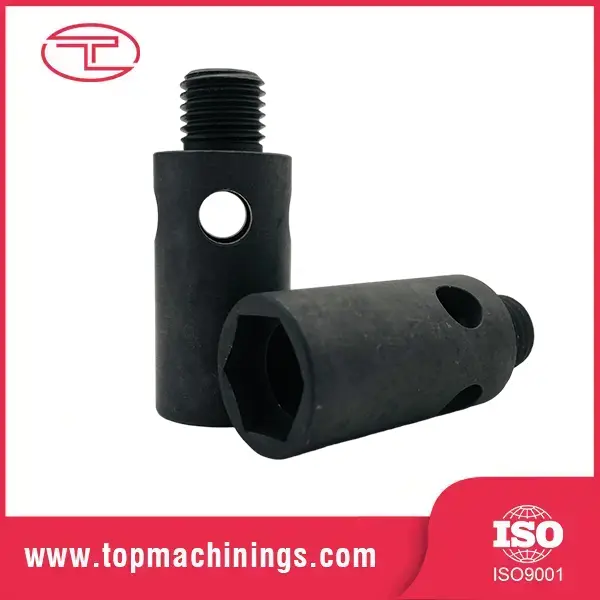
CNC Machined Components


Passivation, Free Iron and Stainless Steel That Rusts

Stainless steel that shows rust spots is normally not a material failure. It is free iron left on the surface by machining, handling, or a mild steel brush, and it corrodes while the surrounding alloy stays intact. Passivation in a citric or nitric acid bath removes that contamination, which is why stainless parts that will see chlorides, food contact, or cleanroom conditions are routinely passivated after machining. The standards used are ASTM A967 for passivation and ASTM A380 for cleaning and descaling before it.


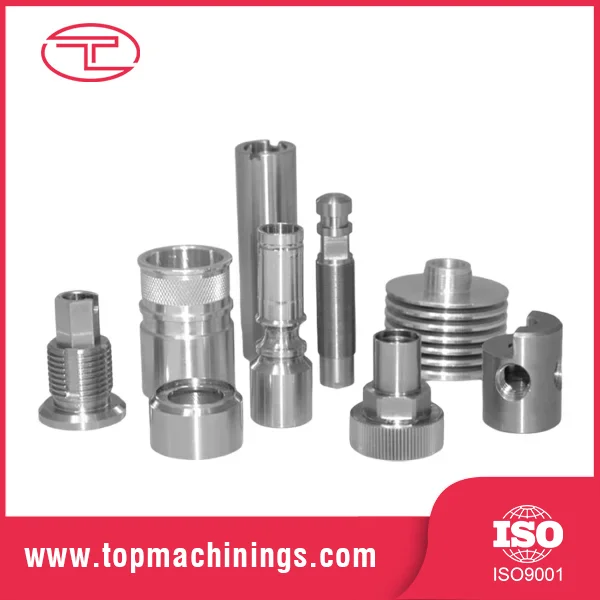
CNC Machined Components

Related News
Leave me a message
X
We use cookies to offer you a better browsing experience, analyze site traffic and personalize content. By using this site, you agree to our use of cookies. Privacy Policy
RejectAccept